

- English
- Español
- Italiano

The Development of Green Alternatives Under the Global Plastic Ban Trend — Focusing on Corn-Starch Disposable Tableware
Time: 2026-08-13 09:49:58
Click:
Against the global plastic‑ban background, various eco‑friendly substitutes for single‑use tableware have emerged overseas, including paper, bagasse, seaweed‑based and PLA products, yet each has obvious limitations. Corn‑starch disposable tableware stands out with renewable raw materials, good biodegradability and stable physical performance. It can degrade into carbon dioxide and water within 30‑90 days, resists high temperature, oil and water, and fits take‑away, catering and outdoor scenarios
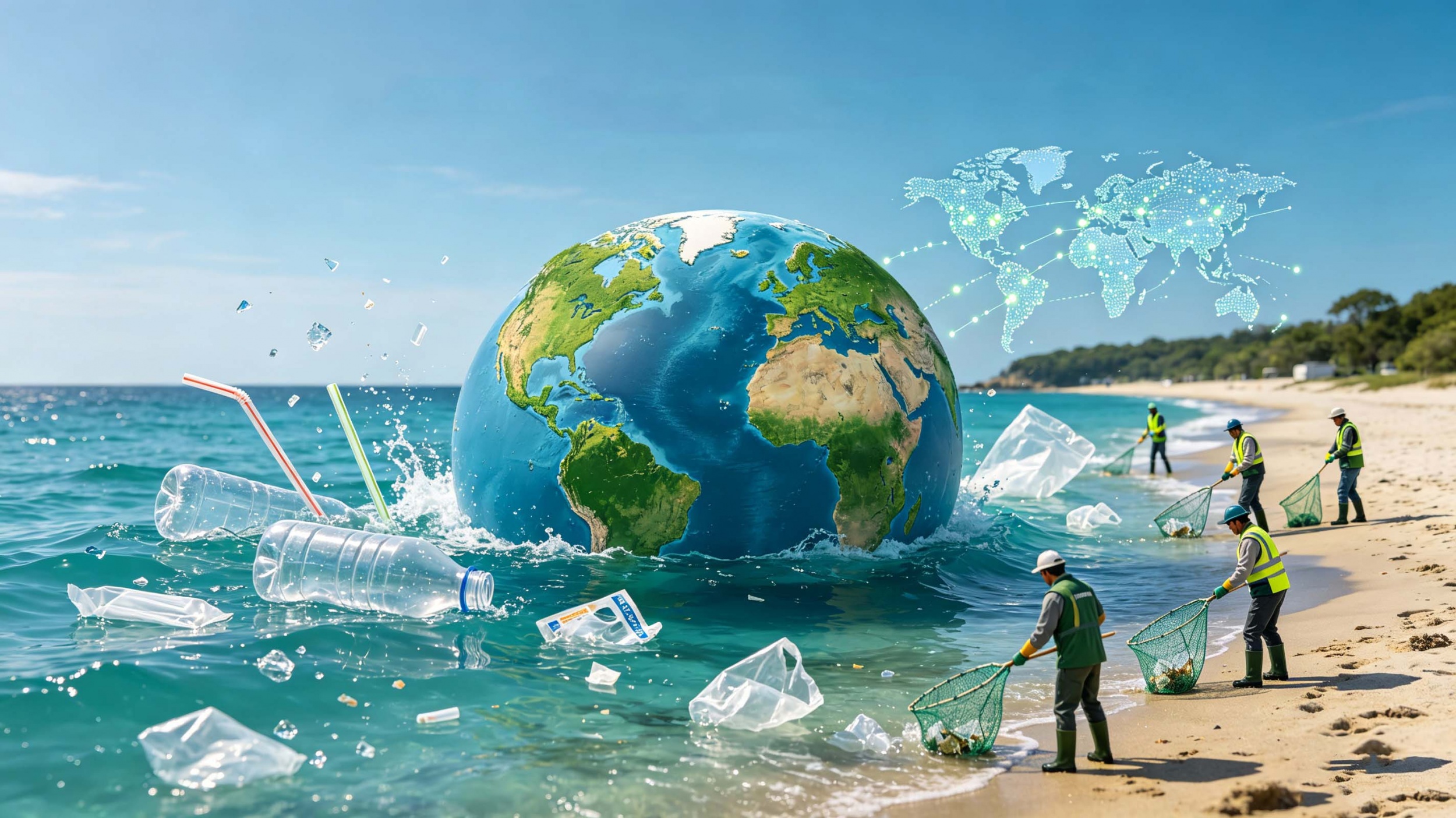
With the continuous advancement of global environmental governance, plastic-ban and plastic-restriction regulations have been rolled out across the world. Strict restrictions are imposed on the production, sale and usage of traditional single-use plastic tableware, triggering material innovation in catering, food delivery and retail industries. Conventional plastic tableware cannot biodegrade, pollutes soil and water, and harms ecosystems. Finding safe, eco-friendly, cost-effective and mass-producible substitutes has become a shared goal of the global industry.
Many countries have introduced mandatory plastic-control policies. The EU bans single-use plastic cutlery, straws and tableware and requires member states to complete relevant replacement work by 2030. In the United States, states such as California and New York enforce strict plastic bans, where only certified compostable tableware is permitted for commercial use. Canada implemented a nationwide single-use plastic ban, replacing plastic tableware in government canteens and public dining premises. Countries in South America such as Brazil and Colombia are phasing out non-degradable plastic tableware by upgrading waste-management systems, which greatly fuels market demand for eco-friendly tableware.
Overseas markets have witnessed the emergence of diversified alternatives, including paper tableware, bagasse tableware, seaweed-based tableware and PLA tableware, while each material has its own drawbacks. Paper tableware features mature technology and low cost for cold-food packaging, yet it deforms easily under high temperature and consumes large quantities of wood resources. Bagasse tableware made from sugar-manufacturing waste enjoys good natural composting performance, but its supply is limited by seasonal and geographical factors and finished products are brittle. Seaweed-based tableware is an innovative edible material that can degrade in seawater; however, immature mass-production technology and high costs confine it to niche high-end markets. PLA tableware owns plastic-like texture and good biodegradability, yet its degradation heavily relies on industrial composting facilities and it tends to soften under high-temperature conditions.
Against this background, corn-starch disposable tableware stands out among various substitutes. It takes natural corn starch as core raw material, blended and modified with biodegradable polymers such as PBAT and PLA, and can be thermoformed into plates, bowls, food containers, knives, forks and spoons to satisfy full-range catering demands.
In terms of environmental performance, corn starch originates from renewable agricultural crops and lowers dependence on petroleum feedstock. Its carbon footprint in production is much smaller than plastic and paper products. Discarded corn-starch tableware can be fully decomposed into carbon dioxide and water within 30–90 days under home or industrial composting without heavy-metal residues. Unlike PLA, it can achieve gradual degradation even in natural environments. It meets mainstream international composting certifications and adapts to regions with different waste-treatment infrastructure.
In practical application, upgraded-formula corn-starch tableware gets rid of the historical problems of softening, leakage and poor heat resistance. Optimized formula and molding technology deliver good hardness, toughness, water-oil resistance and high-temperature tolerance. It is suitable for hot soup, fried food and hot meals, covering scenarios of take-out, outdoor activities, public canteens and household use. With stable comprehensive performance and competitive pricing, corn-starch disposable tableware is gaining increasing recognition from overseas importers, distributors and end consumers, becoming one of the most promising mainstream solutions for global plastic-ban implementation.

点击右上角
分享给朋友吧







 Long by picture save/share
0
PREV
NEXT
More Information
-
Corn Starch and Pape...
With the implementation of global plastic ban policies, single-use plastics are phased out of the market. Corn starch biodegradable tableware and paper products become two major alternatives. Corn starch products feature good heat and water resistance for hot food and takeaway packaging. Paper packaging is cost-effective and easy to recycle for supermarkets and general packaging. These two eco-friendly materials complement each other to reduce white pollution and drive low-carbon transformation

-
Global Nations Accel...
In 2026, countries in Europe, Africa and Asia have introduced stricter phased bans on single-use plastics. This article sorts out the latest plastic restriction policies of the EU, Botswana, Ghana, Georgia and India, and analyzes the global trend of plastic pollution control and the development of eco-friendly alternative materials.
-
Global Sustainable T...
Driven by global low‑carbon goals and plastic‑restriction policies, corn‑starch disposable tableware is widely adopted as a green alternative to single‑use plastics. Updated material formulas improve heat‑resistant, waterproof and oil‑proof performance. The industry still faces cost and compost‑infrastructure challenges for global market expansion.
-
Corn‑starch Composta...
More countries are enforcing plastic‑ban legislation for single‑use food contact items. Corn‑starch compostable tableware offers a viable alternative for overseas catering buyers. This article covers material performance, export certification requirements, cost trends and existing industry limitations for global eco‑tableware procurement.
-
Corn-starch Disposab...
Driven by global single-use plastic bans, corn-starch disposable tableware sees explosive growth. It features high temperature resistance, full industrial compostability and low carbon emissions, widely used in catering, takeaway and airline industries. The market maintains double-digit annual growth, with Asian manufacturers expanding production to meet overseas demand.
-
Impacts of Corn-star...
This article analyzes the dual impacts of corn-starch-based disposable tableware on the global disposable tableware industry under overseas plastic ban policies, including its positive market effects, material limitations and long-term industry trends.



PREV
NEXT
 E-mail
 WhatsApp
 FaceBook
 Linkedin
 X
X Pinterest
 Messenger
 Youtube
 X
X Pinterest
 Linkedin